

Horses on outfield grazing
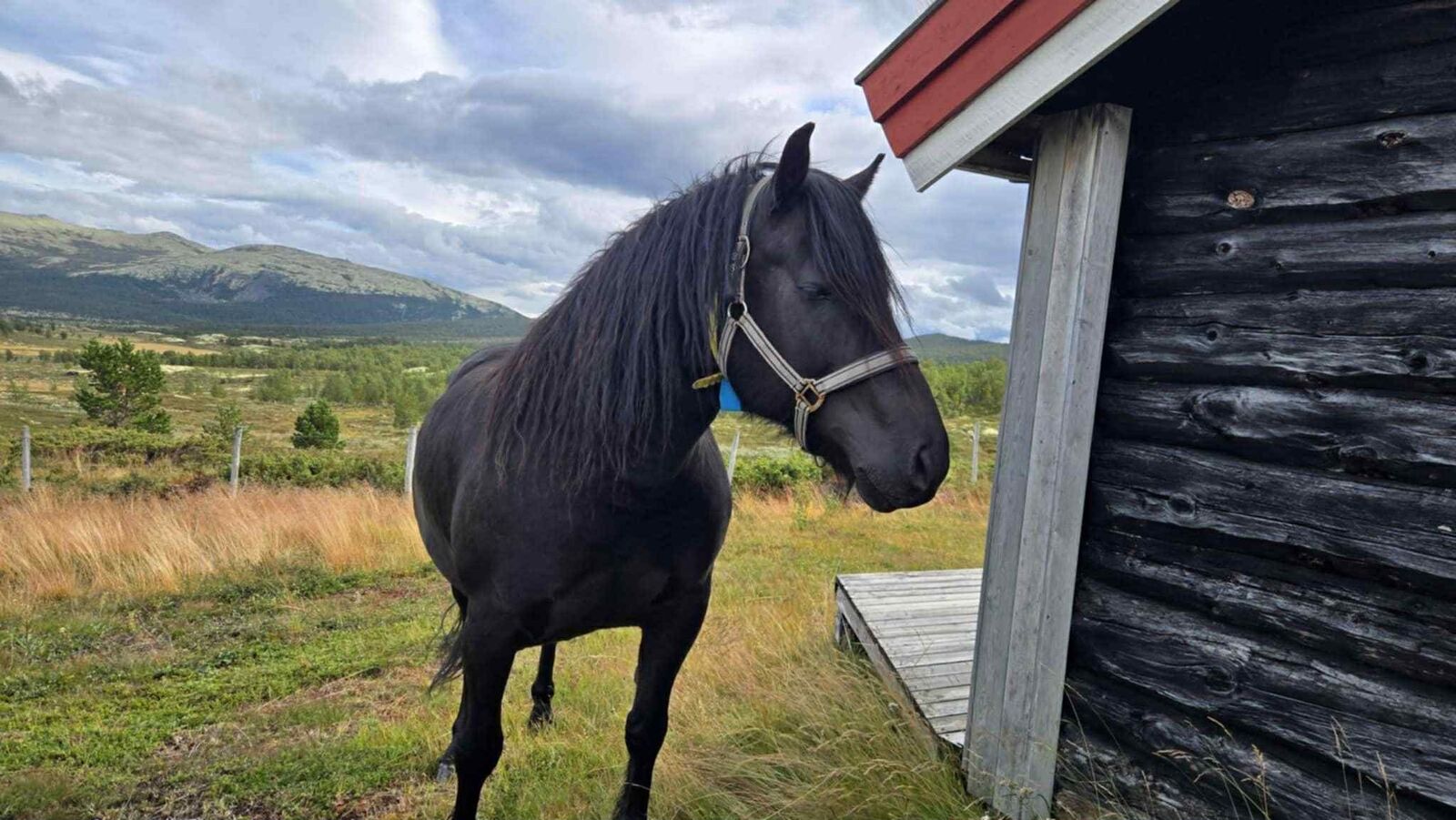
Horses have grazed in the Norwegian outfields for as long as we've kept them. The summer farms, mountain pastures, and enclosed pastures are an old tradition, and many still maintain it. Grazing Control makes the season easier: you see where the horses are, you get alerts when an animal isn't moving as it should, and you're notified when they leave the grazing area.
Simple monitoring
You see where the herd is before you get in the car. You make the trip when there's something to check on.
Alerts from the outfield
A horse standing still, or a herd heading toward the road, becomes an alert on your phone.
Knowledge about the pasture
The track log shows where they've been throughout the season. This way you can follow the development year after year.
Horses have always grazed in the outfields during summer. They use the grazing resources in the outfield, keep the landscape open, and come home in the fall in good condition.
What has changed is the distance. Fewer people live at the summer farm, fences are farther apart, and monitoring often becomes a two-hour drive to check on horses that could be standing anywhere in the grazing area. It's not the tradition that's the problem, it's the time it demands of you today.
Grazing Control doesn't change the way you operate. It gives you an overview of the grazing area without having to drive there to get it.
Positions from places the mobile network doesn't reach
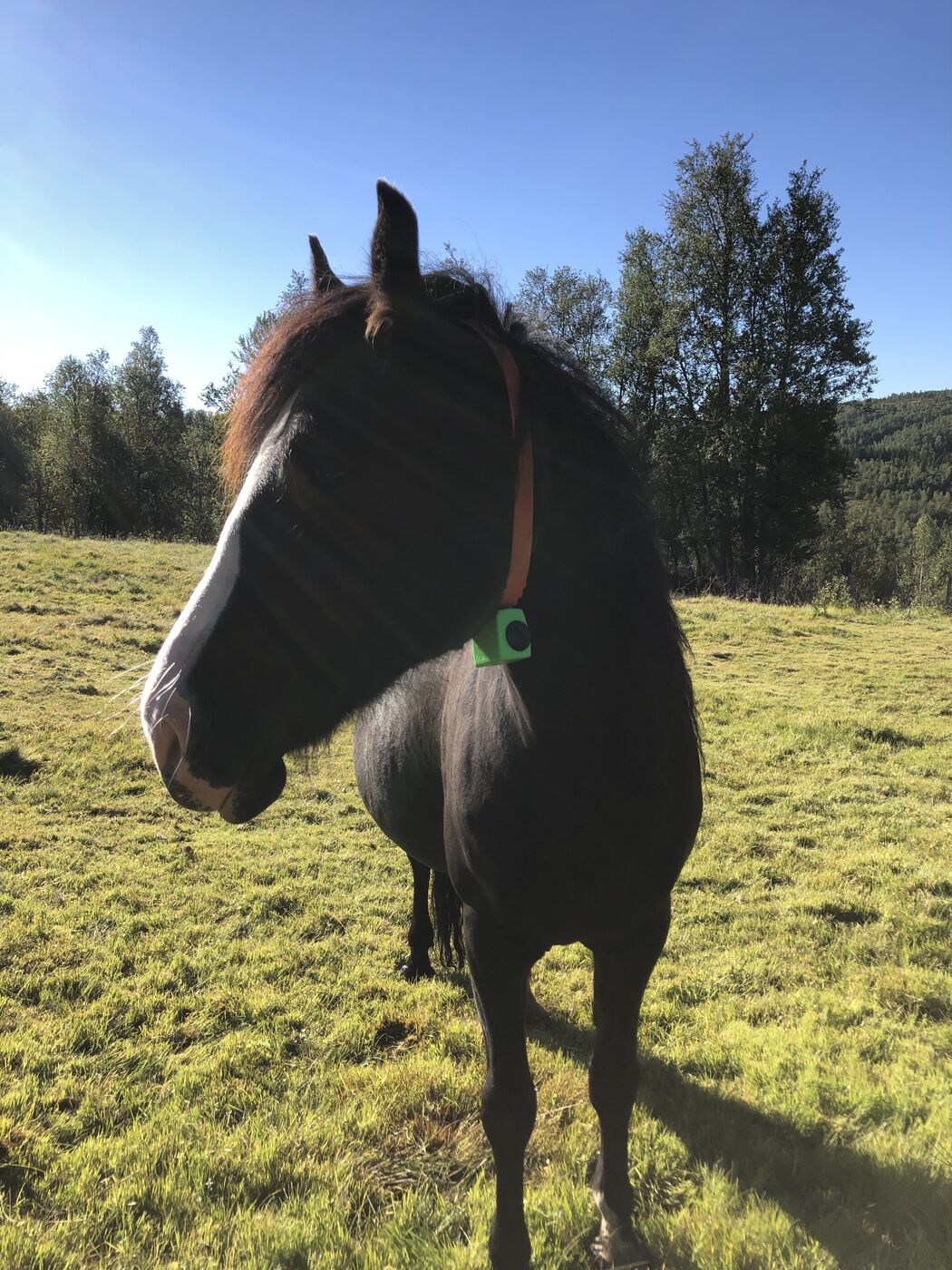
Horses on outfield grazing go where coverage is poorest: deep in the valley, in dense forest, over on the far side of the mountain. The e-Bell transmits via satellite, and the satellite sees the entire grazing area no matter how far it is to the nearest base station.
Where mobile network exists, the hybrid model uses it and transmits more frequently. Where it doesn't, messages go via satellite as before. The bell attaches to the mane or on a separate collar, withstands rain, cold, and scrub forest, and runs on battery throughout the entire season.
Three things that make it easier to keep horses in the outfield
Select an area to see what it means during the grazing season.
You know where the horses are, even where the mobile network doesn't reach
Positions come in via satellite throughout the entire grazing season. The track log shows time, coordinates, channel, and accuracy for each message, so you can see if the herd has moved to a new area before you drive out.
- Satellite coverage in the outfield, hybrid where mobile network exists
- Track log per horse with time, coordinates, and channel
- Monitoring can be documented, positions are stored

The alarm comes while you can still do something
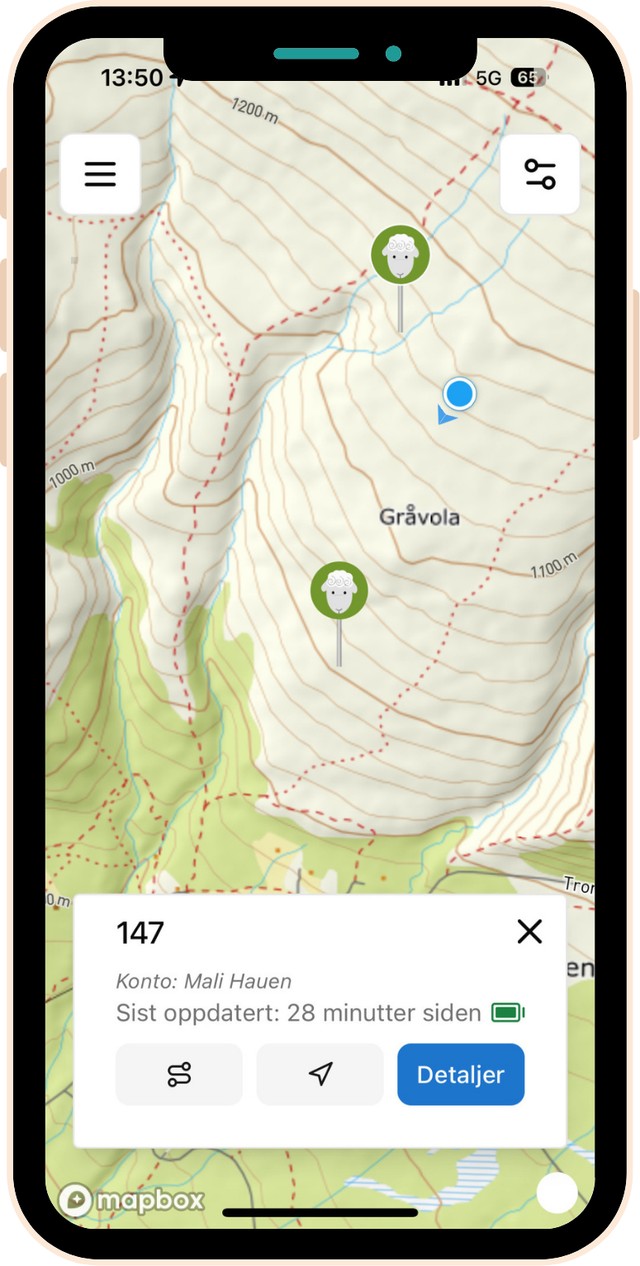
The motion sensors inside the e-bell tell you if the horse is stressed or standing still unusually long. It's rarely dramatic, but when it is, the hours are the most important thing you have.
A horse that remains lying down, is stuck in a bog or fence, or has injured itself, stands still longer than usual. The alarm notifies you while you can still get out to the animal, and provides documentation if the horse is dead.
Loose dogs, predators, or people chasing the herd create a movement pattern that doesn't resemble grazing. You're notified immediately, and can see in the track log where they fled.
You draw the grazing area yourself
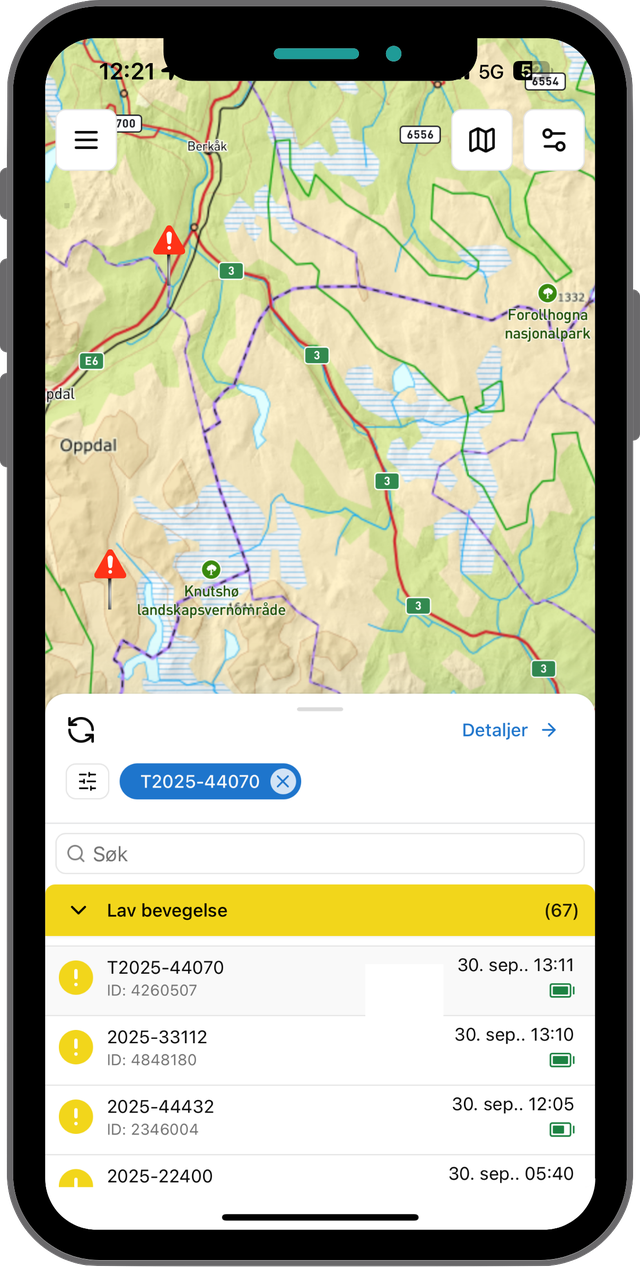
Geo-Fence is the area you draw on the map. The exit alarm notifies you when the horses leave it. The entry alarm notifies you when they approach something you want to keep them away from: county road, railway, cultivated land, or the neighbor's yard.
For horses, it's usually the road that's the risk. An alert that the herd is on the wrong side of the fence gives you time to do something before an accident happens.
- Adjust the area when you move the horses to new pasture
- Exit and entry alarms in the same map
- The alert goes to everyone who shares the herd with you
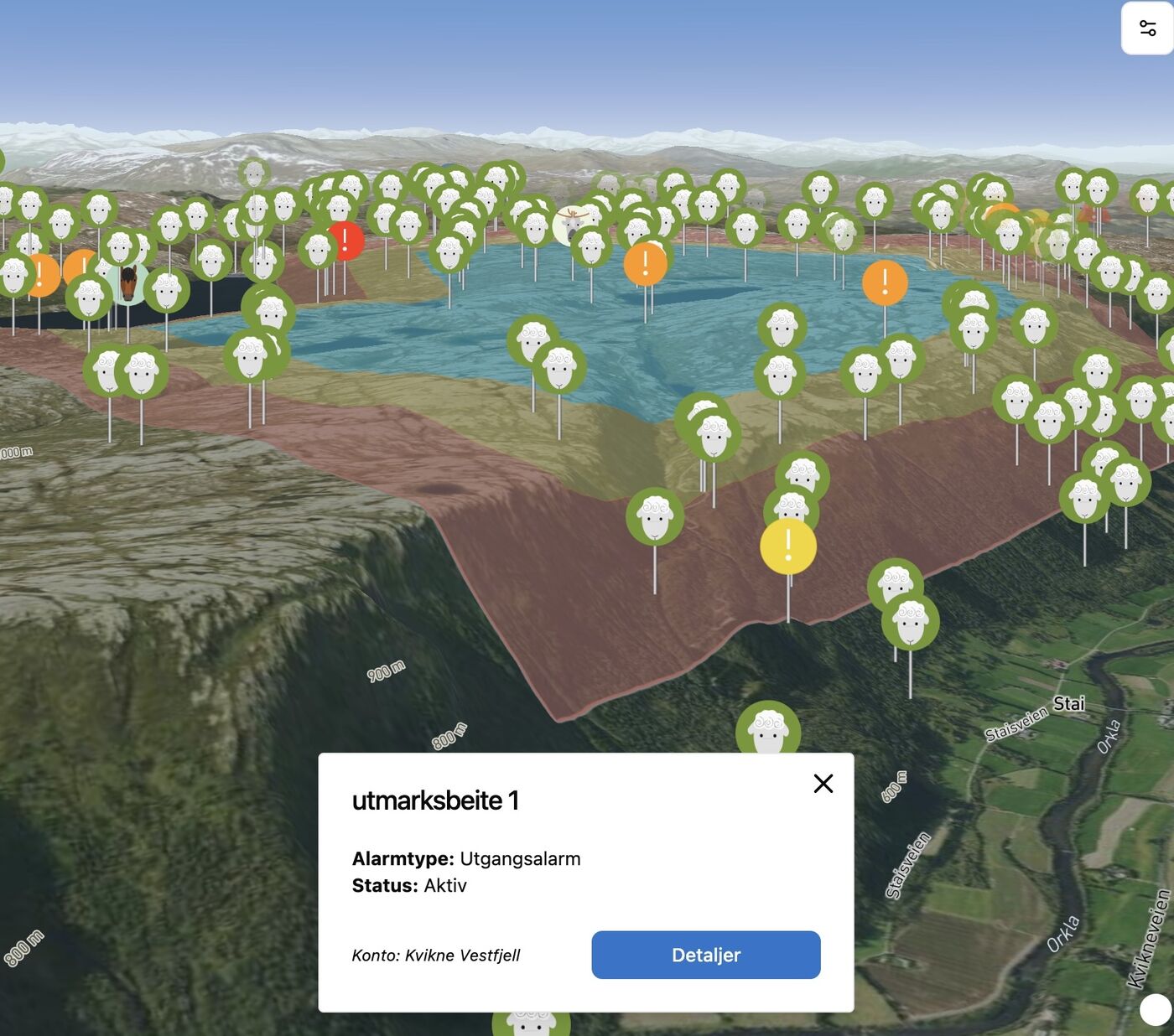 Geo-Fence · active
Horses get the same system built for the outfield
Grazing Control is developed for animals that roam freely over large areas without mobile coverage. It's the same e-bell, the same satellite network, and the same app used on 45,000 animals in Norwegian outfields, and your horse connects directly into it.
You get positions, sensor alarms, and Geo-Fence, you share the herd with others who monitor, and you have the history from previous seasons to look back on. If you have horses and sheep on the same pasture, both are in the same map and same app. If you have needs we don't cover, let us know—features are built based on what users request.
Get a quote for your horses
Tell us how many horses you have and where they graze. We recommend a model based on the coverage where they roam.
- Response within one business day
- You can start with a bell on one animal in the herd
- No commitment before you've seen the price
