

Alert when the animal is stationary
A ewe stuck on her back has hours, not days. The sensors in the e-bell detect that the animal has stopped moving, and you receive the alert on your phone.
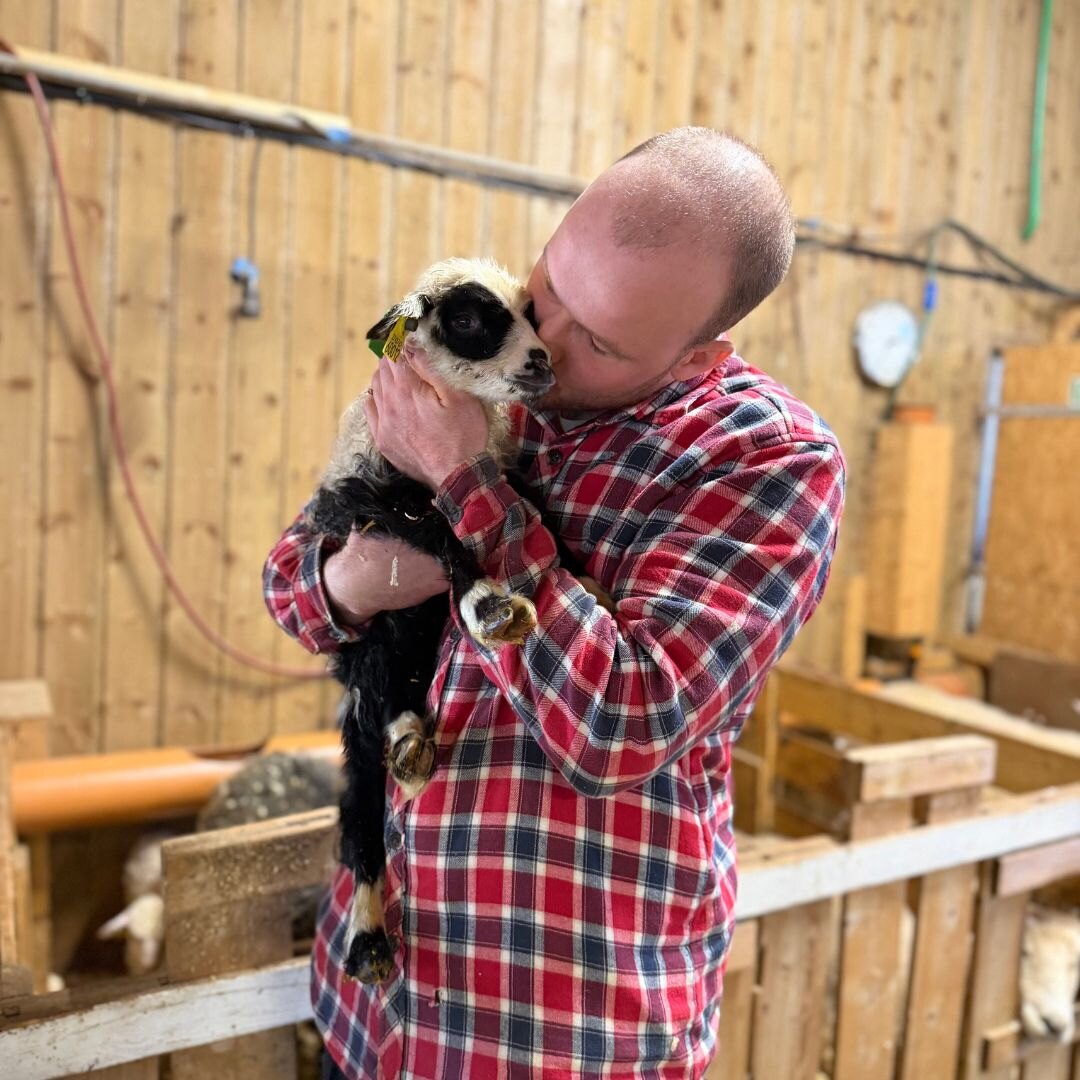
“We’ve saved several ewes from being stuck on their backs by keeping an eye on alarms and alerts”
Anders and Ingrid have sheep on mountain pastures, and they use the alerts actively throughout the grazing season. If an alert comes in saying an animal is stationary, they head straight there. This makes inspections more efficient and saves lives that would otherwise be lost.
“Knowing that the animals are doing well in the mountains is the most important thing for us”
The alerts don't take away the work and don't replace inspections, but they move the trips to where they are needed.
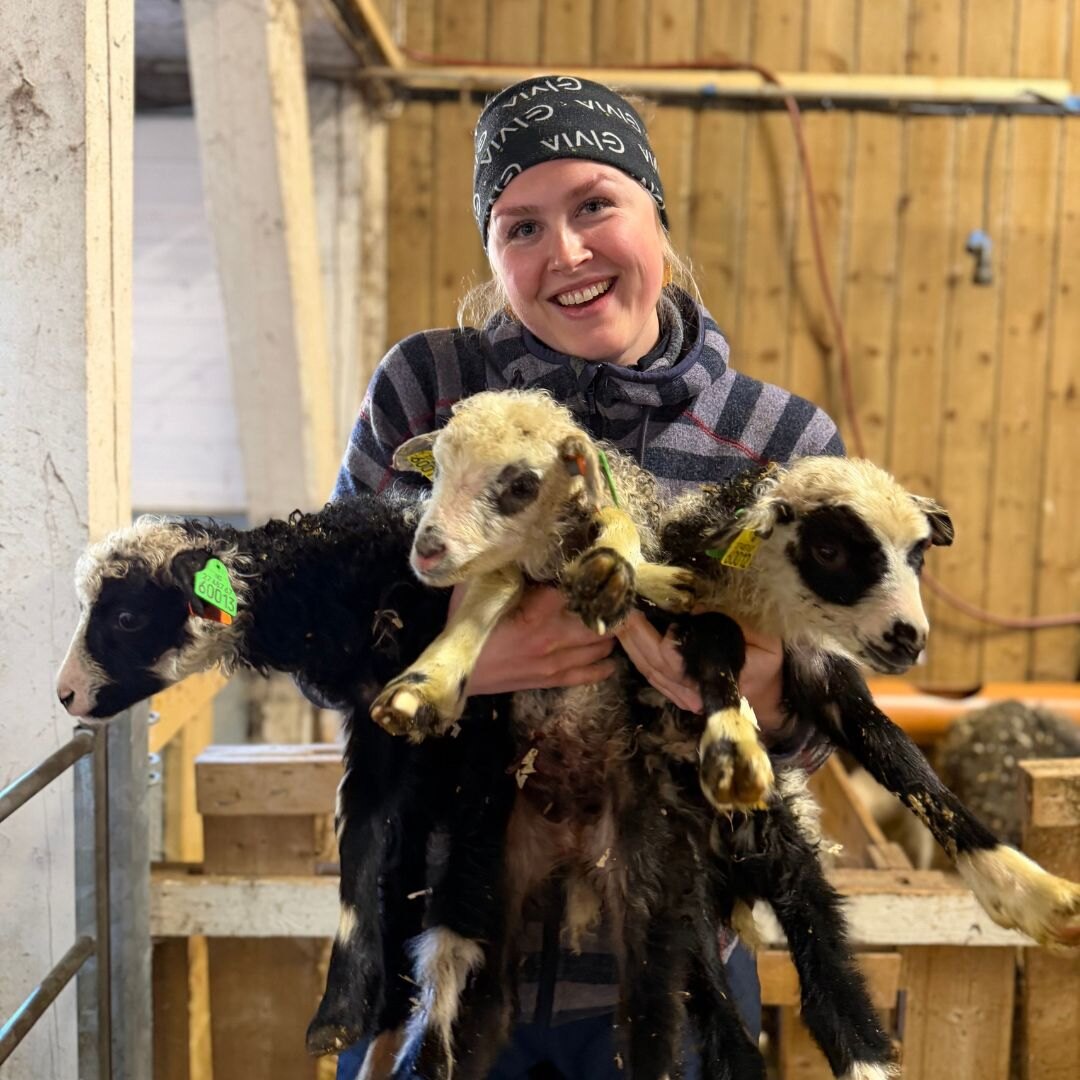
Four things the e-bell reports
The motion sensor measures how the animal behaves, not just where it is. The alert is sent out with the next message from the bell.

Inactivity
The motion sensor in the e-bell has triggered an alarm because the animal has been inactive.
Must be checked. The animal could be dead or seriously ill. Also check if the e-bell has fallen off and is lying on the ground.

Stress
The animal has unusually high activity.
The animal may be chased by predators, a loose dog, or humans. If several animals in the same area trigger stress alerts, the area should be checked.

No movement
The position has very little distance from the previous known position at least twice in a row.
The animal may be stuck, sick, injured, or have rolled onto its back. Check if it is standing in a small area, or is naturally back in the same spot.

High movement
The animal has moved unusually far since the last known position.
The animal may be spooked, have lost a lamb, or be moving to a new pasture. Gathering, transport, and inaccurate GPS can also trigger the alarm.
The alerts are sent via satellite where mobile networks don't reach. You get them in the mountains, in the valley, and at home in the kitchen.

The position alone doesn't save the ewe. The message does.
Being stuck on the back is a challenge for most sheep farmers. A ewe ends up on her back in rugged terrain and can't get up again. The animal can lie for several days and suffer a slow death.
The e-bell and Grazing Control help you save animals that end up on their backs. The alarm system alerts you if something is abnormal and gives you the opportunity to act.
The same alerts catch more than just animals on their backs. The alarms can indicate that an animal is injured and moving less than usual. They can also indicate that the animal is stuck in difficult terrain.
We alert you, you act, the animal survives.
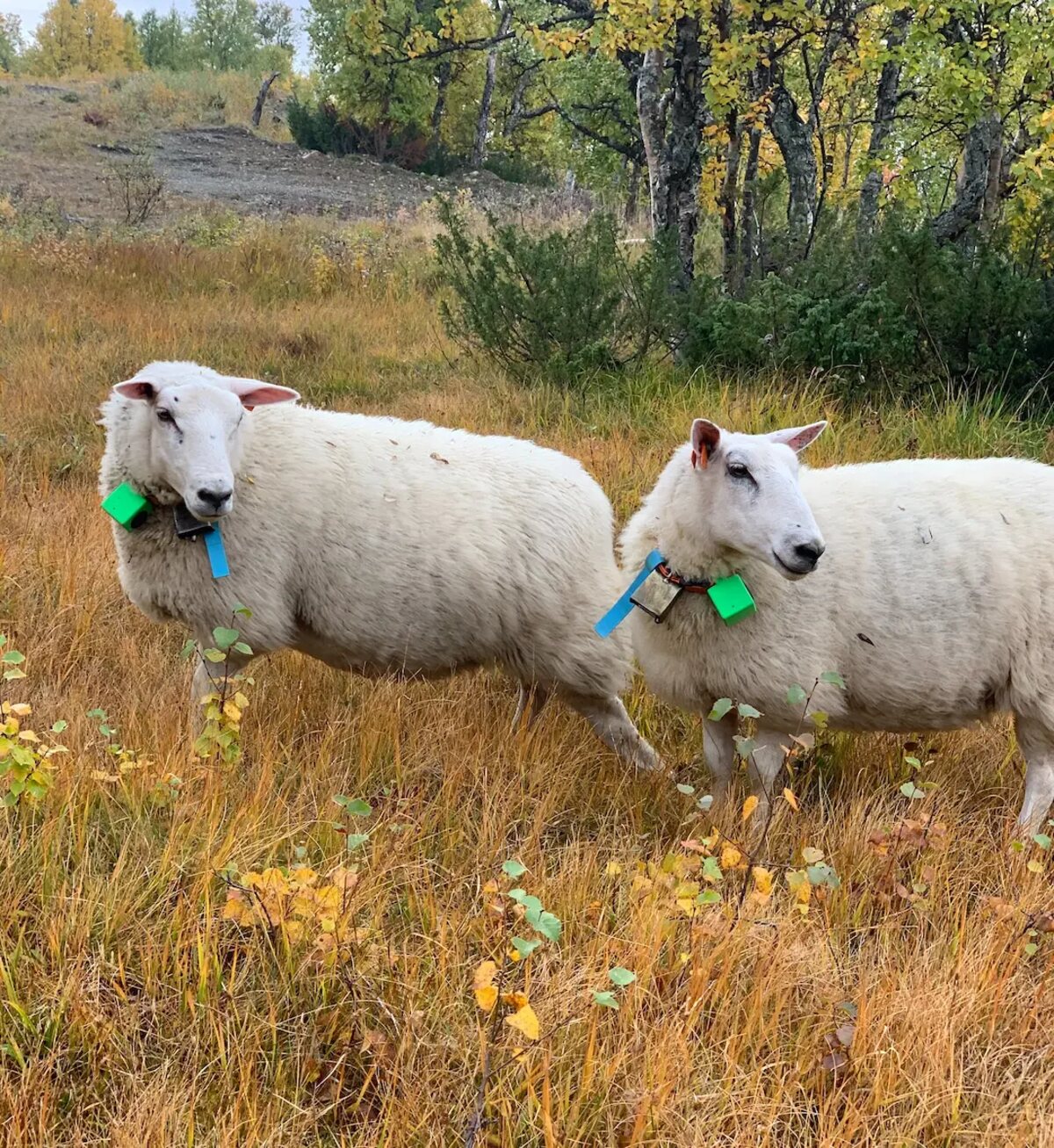
From alert to the ewe standing on her feet
This is what a typical morning looks like. The times are an example, but the sequence is the same.
The bell sends
The message from the ewe has the same position as the previous one, and the sensor has not registered movement between them.
The alert is on your phone
Push notification with animal number, how long she has been lying still, and position.

You head out into the terrain
From the farm to the pasture takes two hours. You know where she is before you start, so the trip goes straight there.
Approx. 2 hoursYou select “go to”
The app points the direction and distance from where you are standing. No searching in rugged terrain, no wandering around aimlessly.
The ewe is on her feet
A ewe on her back is fixed with two hands. The next message from the bell shows movement again, and the alert closes.
Green is good. The icon tells the rest
The whole flock is on the map. The animals that are doing well are green, and those you need to look at get their own alarm icon.
-
All normal Fresh position, no alarm
-
Inactivity The sensor has triggered an alarm. Must be checked.
-
No movement Under 25 m two messages in a row
-
Low movement Early warning. Moved less than 25 m.
-
High movement Unusually far since previous position
-
Stress Unusually high activity


Each animal gets the icon for its worst alarm. Everything is explained in the app under “Map icons”, with possible causes and what you should consider.
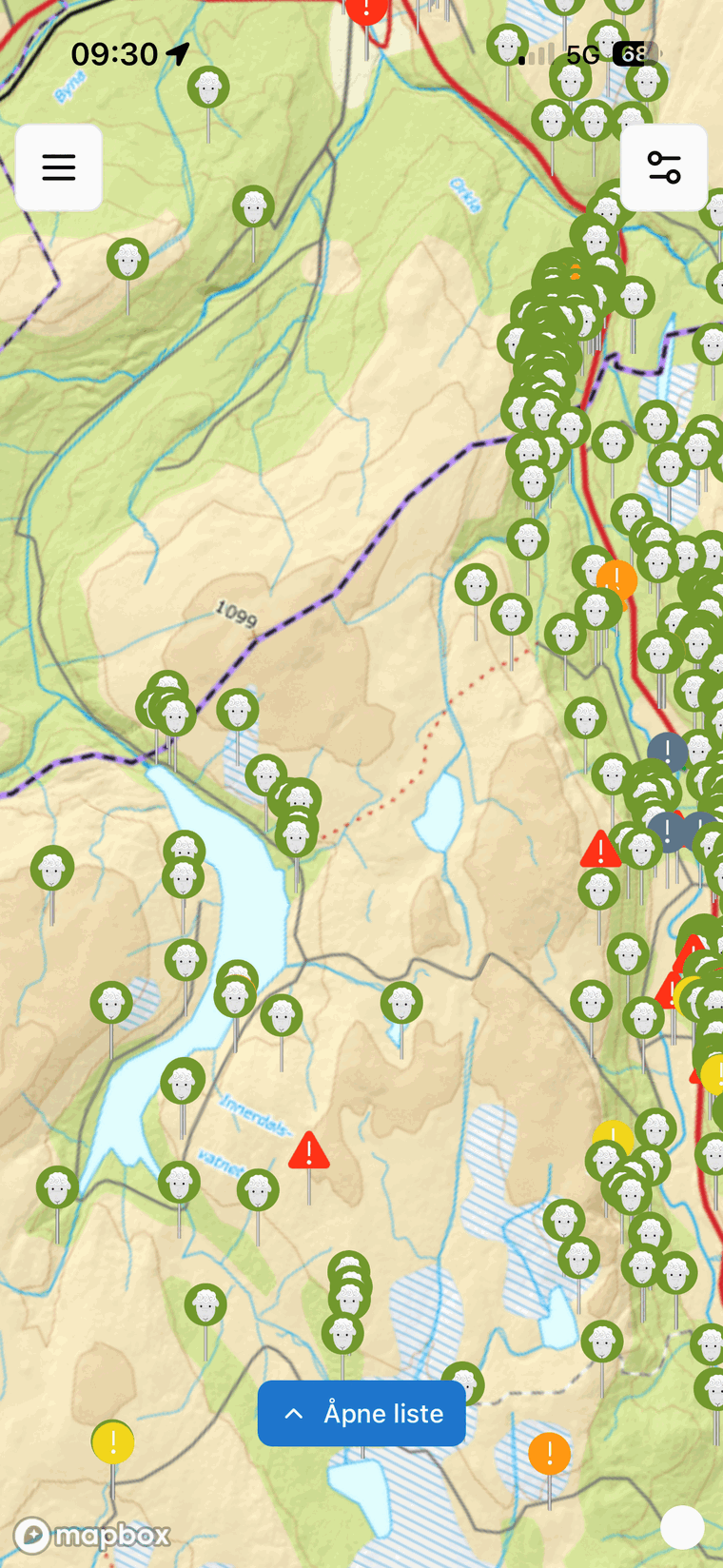
The whole flock on one map. The green ones are doing well, and the alarms stand out with color and shape.
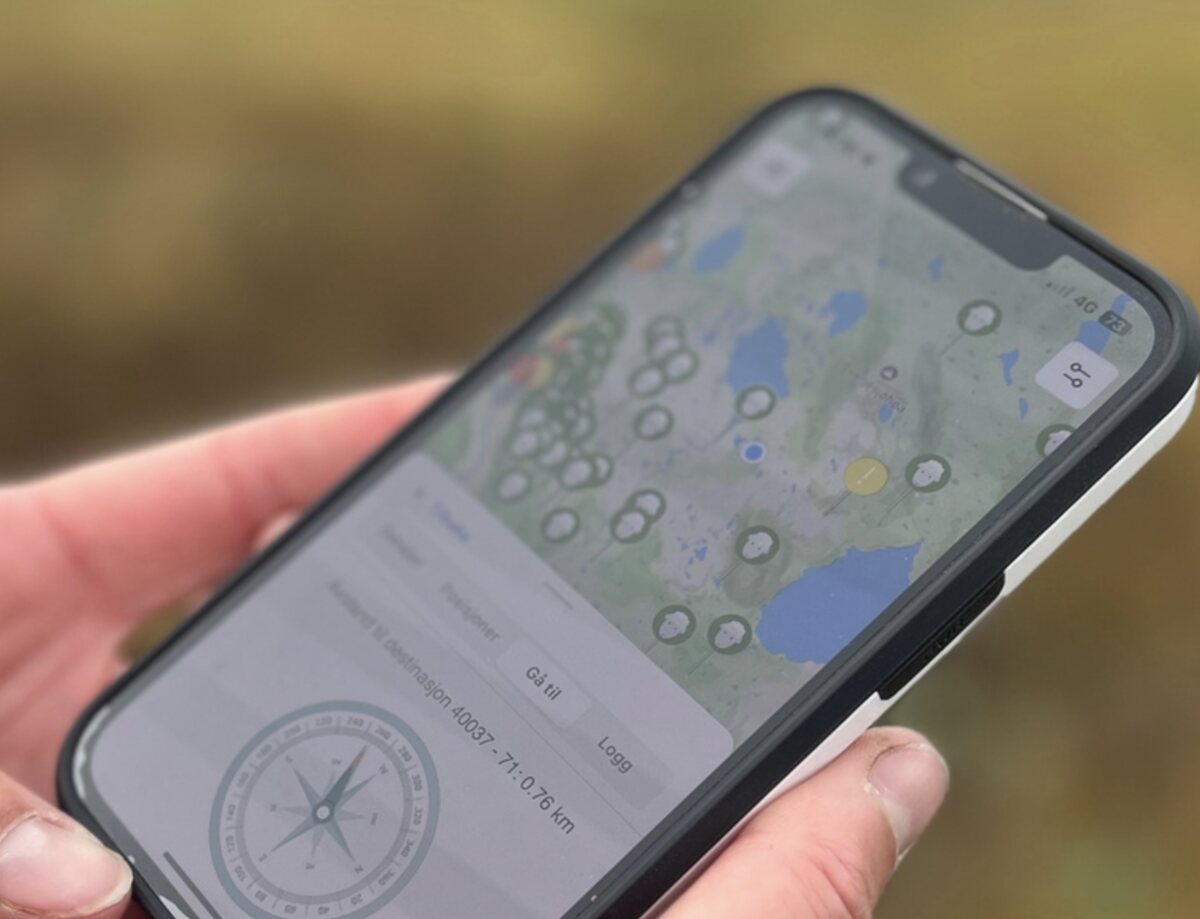
The app points the direction and distance from where you are standing. “Go to” takes you there without searching in rugged terrain.
Three choices, and you're done
Alerts are set on the configuration, not on each individual bell. If you change the threshold once, it applies to the whole flock.


Do you want an alert when the animal is stationary?
The motion sensor is included in the e-bell. We help you with setup, thresholds, and who should receive the alerts.